
Somewhere in a sorting facility, possibly in the eastern district of a city you have not visited, possibly closer to home, a clear plastic bottle is being lifted by a gloved hand from a conveyor belt. The bottle held water once, or perhaps a sweet drink at the end of an afternoon nobody remembers. It was set down on a counter, capped, recycled. It traveled.
It was sorted. It was washed. It was reduced to a flake of itself, then to a pellet, then to a thread.
The thread, eventually, was woven.
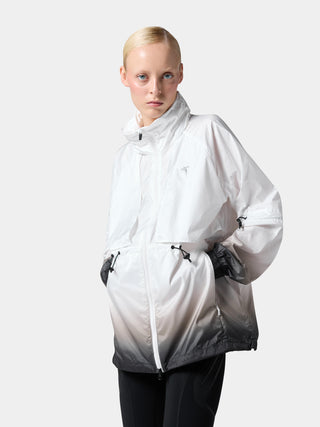
Today, the thread is part of a coat that is hanging in a workshop in Hangzhou. The coat, once it has been cut, sewn, finished, and inspected, will leave the workshop, cross the Indian Ocean, and arrive somewhere another person, in another place, will wear it through a season of weather they could not have predicted when the bottle was first set down.
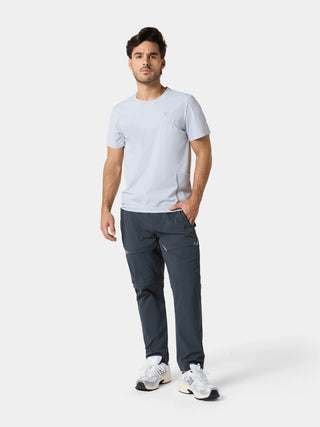
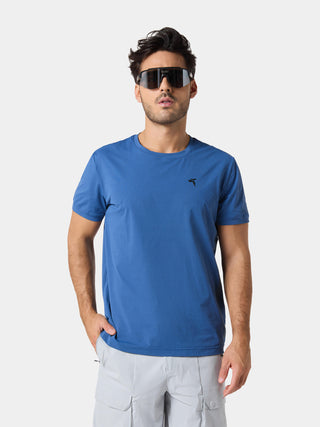
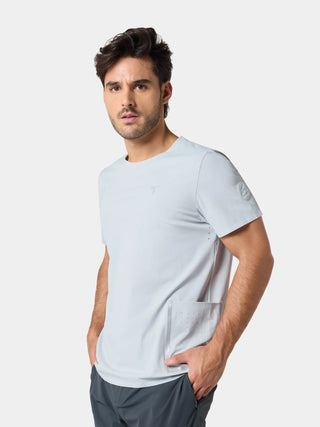
This is the RECYCLED capsule. It is one of the less visible projects inside TITTALLON, and it has been growing for some years now.

The capsule.
RECYCLED is the name TITTALLON gives to the part of its production that is built entirely from post-consumer PET: the plastic bottles, packaging, and containers that have already been used once and would, in another life, end up in landfill or in the ocean.
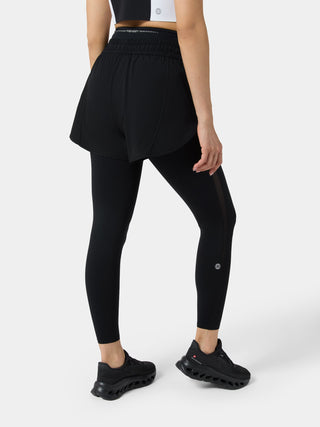
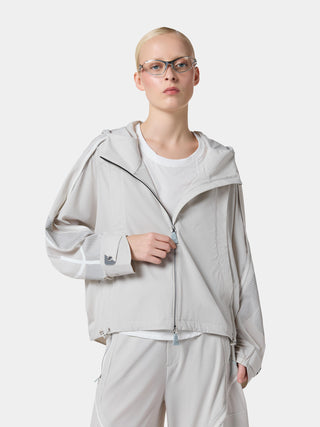
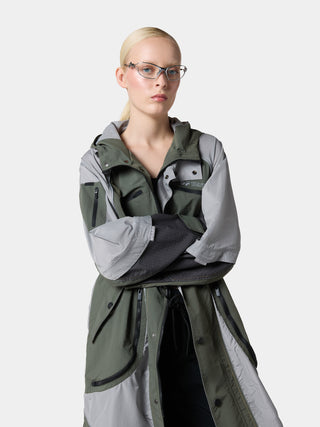
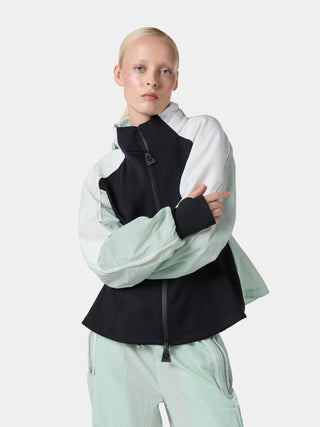
The capsule produces full TITTALLON outerwear pieces, from shells and midlayers to hoods and panels, using fabric whose origin is 100% recycled PET. Not blended. Not partial. Not 30% or 70% with virgin polyester filling the gap. One hundred percent.
This is harder than it sounds. The polymer chains in PET, when broken down and re-extruded, get slightly shorter each cycle. A garment that is 100% rPET has to compensate for that shortening through fabric engineering: through how the fibers are spun, how the weave is constructed, and which mechanical properties (drape · stretch · weight) the fabric is designed to deliver. TITTALLON's broader proprietary fabric stack of PHYLEX, LTR-PRO, POWERFILL, and AIRLAYER gives the brand the engineering depth to do this without compromising the performance the rest of the catalog is known for.
The capsule's framing, codified in TITTALLON's own brand materials, is three words: Eco-friendly · Regenerated Fabric · Sustainability. In lesser hands, three such words would be a marketing line. In TITTALLON's, they describe a working process the brand has been measuring against for years.
The process.
A recycled-PET garment travels through four stages between the discarded bottle and the finished coat: collection, washing and flaking, pelletization and extrusion, and weaving. Each is a small engineering problem TITTALLON has had to solve in partnership with its international supply chain, the same supply chain that brings the brand its other proprietary fabrics.
Collection
Post-consumer PET gathered and sorted by polymer type and color clarity.
Wash & flake
Washed at high heat, stripped of residue, shredded into fingernail-sized flakes.
Pellet & extrude
Melted into uniform pellets, then drawn into filament, fiber length and denier controlled.
Weave
Filament becomes yarn; yarn becomes the fabric of the finished garment.
The discipline is the same discipline that makes the rest of TITTALLON work: choose the partners who know the question, build the relationship over years, refine the process across seasons. The RECYCLED capsule has not arrived overnight. It has been built the way the brand builds everything.
Wear and return.
What this means for the wearer is something most TITTALLON customers will encounter without ever thinking about it.
You buy a piece from the RECYCLED capsule. You wear it through three of those long arcs, or four, or eight. TITTALLON outerwear is built for long arcs. When the piece is finally beyond what it can do for you, beyond a repair, beyond a re-line, beyond the wearing, its fabric is still what it was made from. By TITTALLON's own account, fabric spun from bottle fiber can be recycled into PET fiber again, the same flow the bottle entered on the conveyor belt.

It is sorted. Washed. Reduced. Extruded. Woven again. It becomes the thread of a different piece, made for a different wearer, on a different morning.
This is what the garment comes back means here. Not a metaphor. A material that can be recycled again, so the wearing is one phase of a longer arc.
The twin conversation.
This is one of two conversations NeoSpherium is surfacing this season on sustainability.
Our other District, FENGGY (luxury athleisure for the modern woman, where performance meets couture), has been working the same question from a different place. In August 2024, at the Sanmen Jacket Industry Forum in Shanghai, founder Ge Feng gave a keynote on the power of fashion innovation in the sustainable development of original outdoor brands. TITTALLON's discipline operates inside the established performance-outerwear supply chain (rPET and partner factories). FENGGY's own answer sits where its own brand documents put it. In the material, where the brand has said it works with eco-friendly recycled fabric, biodegradable fiber, and a low-carbon supply chain. And in the design, where detachable construction and multiway wear let a single piece do the work of several. The brand's 2024 A/W collection gives that second half a name: a detachable jacket, listed in FENGGY's own catalog without ornament as the Sustainable Jacket.
Both Districts arrived at the question from different angles. NeoSpherium hosts both, on purpose. Read our companion piece on FENGGY, The Line the Body Wanted to Follow, for the method behind our curation.
What this brings to NeoSpherium.
The dimension RECYCLED brings to NeoSpherium is the proof that performance outerwear and circular production are not opposed disciplines. The garment can be engineered to keep out the cold, hold the warmth in, move with the shoulder, and still be built from material that has already lived a life elsewhere.
You may not have known, when you bought the piece, that it was part of the RECYCLED capsule. That is the design. The information is in the inner label, and on the product page if you go looking. But the wearing of it, the way it does its work on the morning commute, the way it disappears the question of what to wear: that is the same.
The garment is doing its work. The work just happens to also be the work of the bottle, and the worker in the sorting facility, and the engineer who solved the polymer-chain problem, and the partner factory, and NeoSpherium, which gathers it all into one place.
What the cycle knows.
The brand carries a phrase in its sustainability materials:
Eco-friendly · Regenerated Fabric · Sustainability.
Three words. They do not perform the work. They describe it.

What the cycle knows, after years of TITTALLON refining it, is that the question of what happens after the wearing is not separate from the question of what makes the wearing good in the first place. The garment that comes back is the garment that earned the going-out. The discipline of the regeneration is the discipline of the engineering.
The coat that you wear, and that eventually returns, knows the way home. That is the work.
This is the dimension TITTALLON has brought to NeoSpherium, and the one NeoSpherium intends to honor.
Enter TITTALLON within NeoSpherium.