
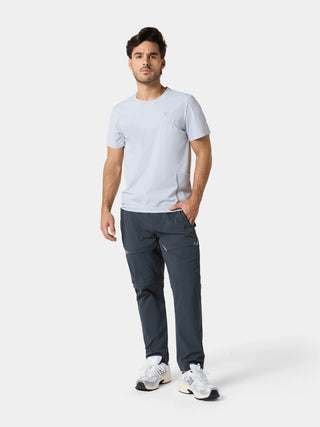
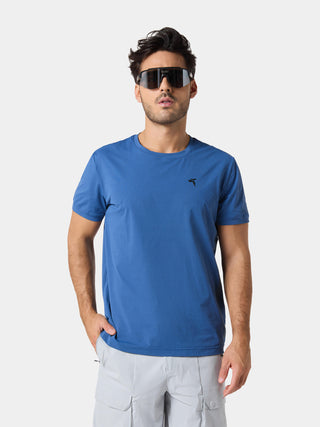
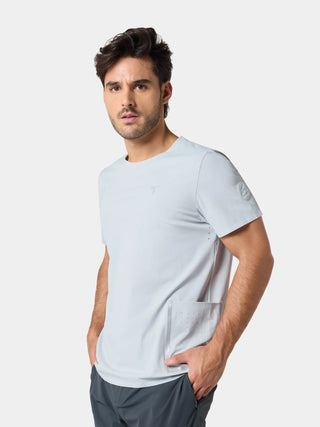
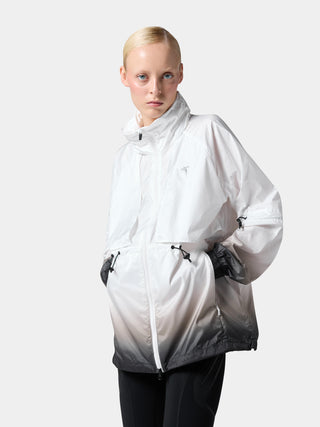
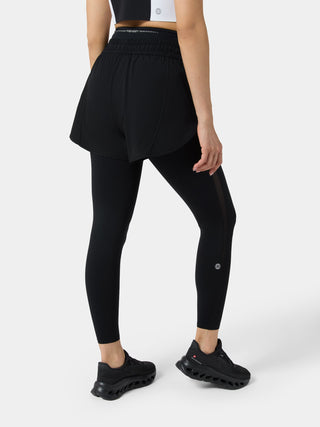

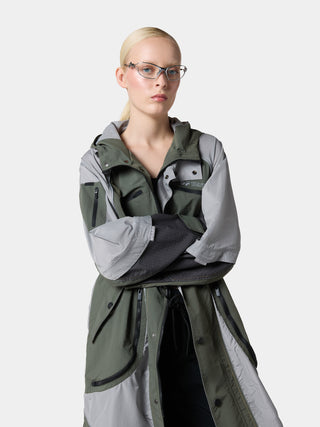
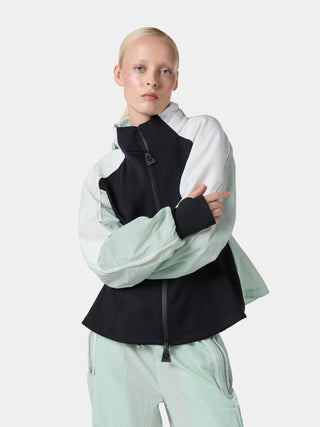
The wearer in the Gulf has access to almost everything and discovery of almost nothing.
The shelves are full. The mall floors continue for kilometers. The advertising follows you across screens and across cities. What is missing is not supply. What is missing is a person who has done the reading on your behalf. This note is about the reading.
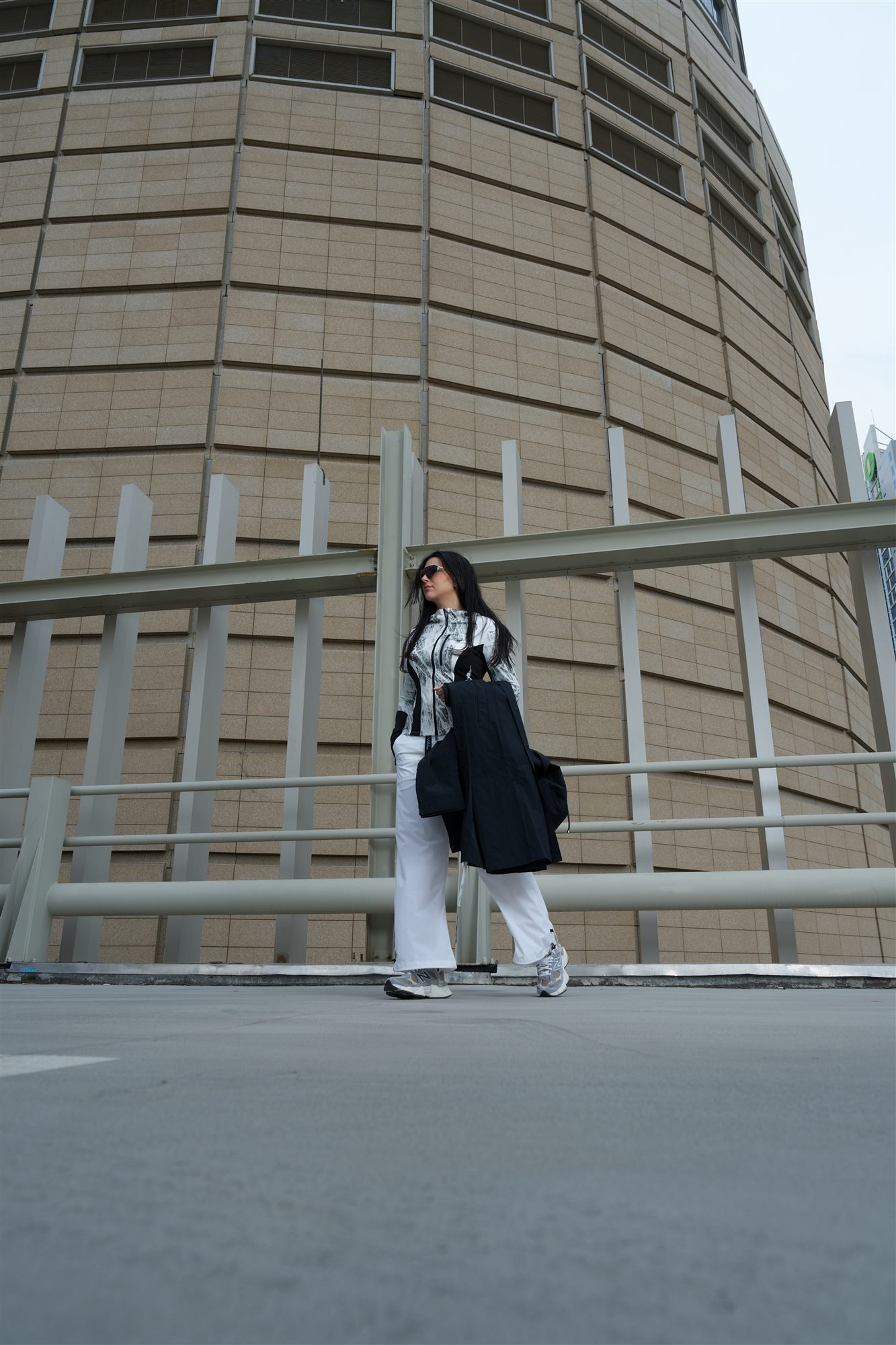
The discovery problem, named.
You have probably tried, at some point, to find a brand worth wearing that did not arrive through the channels arriving by default. You have searched. You have followed accounts that promised curation and delivered the same five names. You have asked friends. You have absorbed the moodboards. You have collected names and let them go again because there was no way to test them against your life from where you sit.
This is not your failure. The discovery problem is structural. At the register where craft, intent, and patience compose into something the wearer can trust, a brand worth wearing is usually a small operation. It is run by a designer who is also the technician. It releases slowly. It does not buy attention. It exists, often, in a single workshop in a place your global feed has never directed you toward. The probability that the algorithm surfaces it is low. The brands themselves are not hiding. They are simply not in the lanes the wearer has been given to look through.
What a curator actually does.
A curator, in the sense the word meant before it was diluted, is a person who has chosen to do this reading as their work.
The curator watches the field: the field of brands, of methodologies, of materials, of designers' postures toward their own object. The curator reads what each brand is actually saying through what it actually makes, not through what it claims about itself. The curator notices when a brand has spent three years refining a single fabric system. The curator notices when a brand releases the same coat for the seventh year with one small honest improvement. The curator notices when a brand stops releasing for two seasons because it has not yet finished the next piece to its own register.

These signals do not surface in advertising. They surface in the work itself, slowly, to someone who is watching with patience. The curator also notices the inverse: when a brand is mostly an aesthetic positioning with the manufacturing outsourced to an undifferentiated supplier; when the press release is louder than the garment; when novelty is doing the work that craft used to do. The curator's reading is the act of distinguishing one from the other, brand by brand, season by season. It brings forward only what holds.
Why the GCC needs its own curator.
For most of the past decade, the curatorial position for the broader luxury and emerging-brand conversation has lived in New York, Paris, Tokyo, Milan, and Seoul. Those curators read their own fields. Their fields are not the field a wearer in Kuwait, Riyadh, Dubai, Doha, or Manama actually lives inside.
The wearer in the GCC has a particular life. The climate is its own: long warm seasons, short cool windows, indoor mobility patterns shaped by infrastructure rather than the open-street walking commute of European cities. The cultural rhythm is its own: across most of the Gulf, the working week begins on Sunday; the day pauses for the prayer hours; the maghrib light arrives at a specific time that organizes how the evening unfolds. The values are their own: refinement valued without ostentation; quality valued over volume.
A brand that meets this life will not always be the same brand a Paris curator would surface. A coat designed for a northern winter will not always be the same coat that serves a wearer between an air-conditioned office and an evening at home. The reading that finds the right brands is regional reading. This is the reading NeoSpherium is built to do.
Where brands worth gathering actually live.
The brands NeoSpherium reads for live in many places.
Some live in design studios in coastal Chinese cities, where designer-led independent labels are doing serious technical work in performance-leaning silhouettes. One of these is FENGGY: luxury athleisure for the modern woman, where performance meets couture. The brand was founded in 2019 by the Shanghai-based designer Ge Feng. What the reading found there was method: draped patterning carried through a full sports wardrobe, and outerwear made to be taken apart, with hoods and sleeves that detach so one piece covers more of the year.
Some live in performance outerwear houses that develop proprietary fabric systems against the kinds of weather conditions that do not respect the calendar. TITTALLON, NeoSpherium's District for minimalist all-season performance outerwear, is one of them, with a methodology that favors long iteration over seasonal novelty.
Some live in ateliers and material practices not yet gathered anywhere. NeoSpherium's curatorial pipeline is open and the reading continues. What unites them is not geography. It is posture. They are brands with a position on what is worth making, and the position holds through the season. They read the market. They are not written by it.
What the wearer gains from a curated reality.
When a wearer arrives at a house with a serious editorial position, the wearer does not begin from zero.
The wearer does not have to perform the discovery work themselves. The wearer does not have to read every brand's claims and try to separate substance from positioning. The wearer does not have to commit to a brand they have never tested and discover, three months in, that the methodology was not what the marketing suggested. The wearer does not have to keep up with twenty regional feeds to find the few names worth keeping.
The wearer receives, instead, the host's reading. The host has spent the time. The host has held the brands against a register. The host has refused most of what was available, and kept only what passed. What is on the shelf is what the host stands behind. This is the gift of curation, properly done. It returns the wearer's time. It returns the wearer's attention.
NeoSpherium as ongoing reading.
The Districts of NeoSpherium so far are TITTALLON and FENGGY. More will follow. The host's reading does not stop with the launch roster; it continues.
The Realm Index is NeoSpherium's serialized editorial work on the Journal. It documents the reading as it happens. The reader who follows it is not consuming content. The reader is reading alongside the host: watching the reading happen, noticing what the host notices, gradually developing a register of their own. This is what discovery looks like at the register the Gulf wearer has been waiting for.
The invitation.
If the discovery problem named at the top of this note is familiar, if you have been carrying the small, accumulating frustration of an undifferentiated mall and an algorithmic feed that surfaces the same five names, you are who NeoSpherium is being built for.
NeoSpherium is opening in stages. The first Districts are gathered. The reading continues. Read its companion note, Curated fashion in Kuwait, in 2026, for the category register of the same conversation.
You are invited, when you are ready, to step into NeoSpherium, where the work of distinguishing has been done on your behalf, and where what is gathered has been chosen because someone stood between you and the field, and made a position.
From the Realm Index: a note from NeoSpherium.